

You’ve found the house. Now comes the paperwork. If you’ve never applied for a mortgage before, the document list can feel like it was designed to overwhelm you — and the last thing you want is to scramble for a missing W-2 while your rate lock ticks down. The good news: knowing exactly what lenders want before you start can shave days off your timeline and protect your credit score while you’re still comparing options.
Through Lower Mortgage Rates and broker Duane Buziak (NMLS #1110647 | Coast2Coast Mortgage LLC, NMLS #376205), borrowers in Virginia, Florida, Tennessee, and Georgia can start the process with a soft credit pull mortgage — meaning you get a real pre-approval picture with no hard inquiry mortgage pre approval impact on your score while you’re still deciding. This guide covers the master document checklist every lender expects, then breaks down how six lenders handle the process differently — so you can gather your paperwork once, compare intelligently, and move fast when you’re ready.
What Every Mortgage Lender Needs: The Master Checklist
Before comparing lenders, it helps to understand the universal document categories that apply regardless of who you choose. The Consumer Financial Protection Bureau (CFPB) outlines the core categories every borrower should prepare. Here’s what that looks like in practice.
Income Verification: W-2 employees typically need the last two years of W-2s, 30 days of recent pay stubs, and two years of federal tax returns. Self-employed borrowers need personal and business tax returns for two years, a year-to-date profit and loss statement, and often 12 to 24 months of business bank statements. Retired borrowers should gather Social Security award letters, pension statements, and 1099-R forms.
Asset Documentation: Most lenders require two to three months of bank statements across all accounts, recent investment and retirement account statements, and — if using gift funds — a signed gift letter with documentation of the transfer. Down payment funds typically need to be “seasoned,” meaning present in your account for at least 60 days.
Identity and Credit Authorization: A government-issued photo ID, your Social Security number, and two years of residential history are standard across the board.
Property Documents: These come after you’re under contract: the signed purchase agreement, a homeowners insurance quote, and HOA documents if applicable.
Program-Specific Additions: VA borrowers need a DD-214 and Certificate of Eligibility (COE), which can be obtained through VA.gov. ITIN borrowers need their Individual Taxpayer Identification documentation and alternative credit history. DSCR and Non-QM borrowers often substitute lease agreements and property income documentation for traditional income docs entirely.
What a Rate Difference Actually Costs You
Here’s why document preparation and lender selection matter beyond paperwork logistics. On a $400,000 30-year fixed mortgage, the difference between a 6.50% rate and a 6.875% rate works out to $99.81 per month. Over the life of the loan, that gap totals $35,931.60 in additional interest paid. That’s not a rounding error — it’s a car, a college semester, or years of retirement savings.
For current rate benchmarks, the Freddie Mac Primary Mortgage Market Survey (PMMS) publishes weekly national average rates. A broker who shops your document package across 500+ wholesale lenders has a structural pricing advantage over a single retail lender quoting from one rate sheet. The math above illustrates why that difference compounds over time.
Broker vs. Retail Lender: How Document Handling Differs
Not all lenders process your documents the same way. The table below compares the structural differences between working with a broker and working with the retail lenders covered in this guide. These are factual structural differences, not rate opinions.
| Feature | Lower Mortgage Rates (Broker) | Rocket Mortgage | Movement Mortgage |
|---|---|---|---|
| Lender Access | 500+ wholesale lenders | Rocket’s rate sheet only | Movement’s rate sheet only |
| Credit Pull at Pre-Approval | Soft pull (NoTouch Credit Pull) | Hard pull required | Hard pull required |
| Document Submission | Single package, shopped across lenders | Proprietary digital portal | In-house underwriting |
| Non-QM / DSCR / Bank Statement | Available | Not publicly available | Not available |
| ITIN Borrowers | Available | Not available | Not available |
| VA Loans (min FICO) | To 500 FICO | Standard overlays apply | Standard overlays apply |
| Down Payment Assistance | Dynamo / Turbo DPA programs | Not available | Not available |
| Licensing | VA, FL, TN, GA | Nationwide | Nationwide |
| Application Fee | No fee for soft-pull pre-approval | No upfront fee; hard pull applies | No upfront fee; hard pull applies |
1. Lower Mortgage Rates (Duane Buziak, NMLS #1110647)
Best for: VA, FL, TN, and GA borrowers who want to shop 500+ lenders without a credit hit
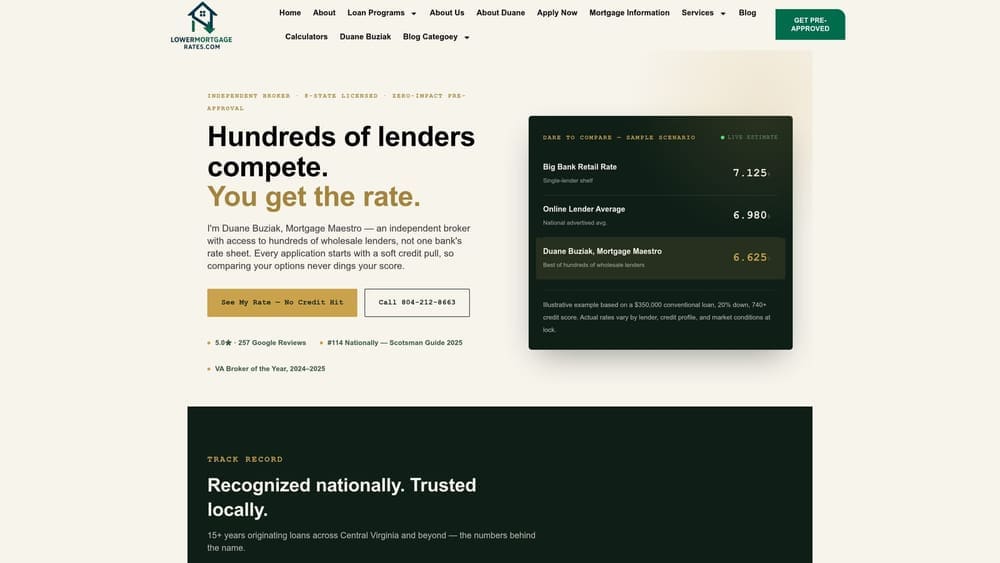
Lower Mortgage Rates is an independent mortgage broker serving Virginia, Florida, Tennessee, and Georgia, operated by Duane Buziak (NMLS #1110647 | Coast2Coast Mortgage LLC, NMLS #376205), that shops your document package across 500+ wholesale lenders using the NoTouch Credit Pull system.
Where This Tool Shines
The structural advantage here is straightforward: you gather your documents once, and a broker submits that single package to multiple wholesale lenders simultaneously. You see competing rate and fee options without repeating the paperwork process or taking a credit hit for each comparison. That’s a meaningful difference from the retail model, where every lender you approach pulls your credit independently.
The program depth is also notable. Beyond conventional, FHA, VA, and USDA, this broker has access to Non-QM, DSCR, Bank Statement, ITIN, and Foreign National programs — loan types that retail lenders rarely offer and that require different document packages. For self-employed borrowers or investors, this opens options that a standard retail application simply cannot match.
Key Features
NoTouch Credit Pull: Soft-pull pre-approval system that provides real rate options with no hard inquiry mortgage pre approval impact — your score stays intact while you compare.
500+ Wholesale Lender Access: A single document package is shopped across hundreds of lenders, not quoted from a single rate sheet.
Broad Program Menu: Non-QM, DSCR, Bank Statement, ITIN, FHA, VA (approved to 500 FICO), USDA, Fannie Mae, and Freddie Mac programs available depending on borrower profile.
Dynamo / Turbo DPA Programs: Down payment assistance options for qualifying borrowers in licensed states.
Dare to Compare: Bring any competing lender offer and the broker will compare it directly — fee by fee, rate by rate.
Best For
Borrowers in Virginia, Florida, Tennessee, or Georgia who want to compare real rate options without a credit score impact. Especially strong for self-employed borrowers, investors using DSCR loans, ITIN borrowers, and VA borrowers with credit scores below the standard retail lender minimums. Also well-suited for first-time buyers exploring down payment assistance options.
Pricing
No application fee for the soft-pull pre-approval. Rate and fee disclosure provided after lender match. Call 804-212-8663 to start the no credit hit mortgage application process.
2. Rocket Mortgage
Best for: Borrowers who want a fully digital application experience with a single retail lender
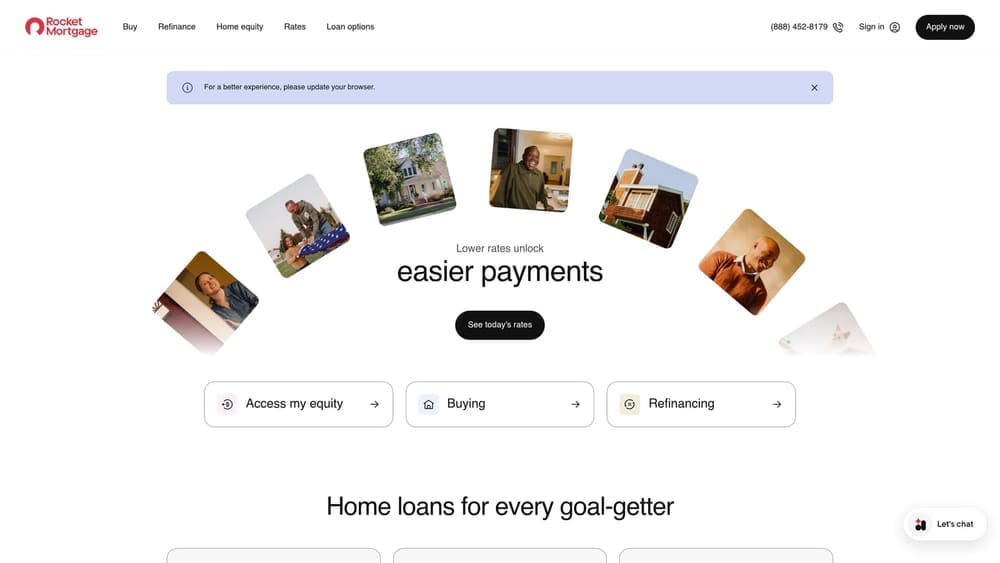
Rocket Mortgage is a retail direct lender offering a fully digital mortgage application experience with automated document verification through its Verified Approval system.
Where This Tool Shines
Rocket’s digital infrastructure is genuinely well-built. The document upload portal allows borrowers to link bank accounts and employer payroll systems directly, which can reduce the manual document-gathering burden for straightforward W-2 borrowers. The Verified Approval product attempts to automate income and asset verification in real time, which can accelerate the early stages of the process.
The tradeoff is structural. Rocket quotes from its own rate sheet only — there is no wholesale lender access, no broker shopping, and no soft-pull pre-approval option. A hard credit pull is required at application, which is standard for retail lenders but worth factoring in if you plan to compare multiple lenders simultaneously.
Key Features
Proprietary Digital Portal: W-2s, pay stubs, and bank statements can be linked or uploaded directly through Rocket’s platform.
Verified Approval: Automated income and asset verification system designed to accelerate document review for qualifying borrowers.
Program Availability: Conventional, FHA, VA, and jumbo programs available from Rocket’s own rate sheet.
Hard Pull at Application: A hard credit inquiry is required to proceed — no soft pull mortgage broker option exists within this model.
No Wholesale Access: Rocket originates from its own rate sheet; borrowers cannot access wholesale lender pricing through this channel.
Best For
W-2 borrowers with straightforward income documentation who prefer a fully digital experience and are comfortable working with a single retail lender. Less suited for self-employed borrowers, ITIN applicants, or anyone who wants to compare rates across multiple lenders without multiple hard inquiries.
Pricing
No upfront application fee. Origination fees and rate structure disclosed at application. Hard credit pull applies at the point of formal application.
3. Movement Mortgage
Best for: Purchase-focused borrowers who want fast in-house underwriting from a branch-based retail lender
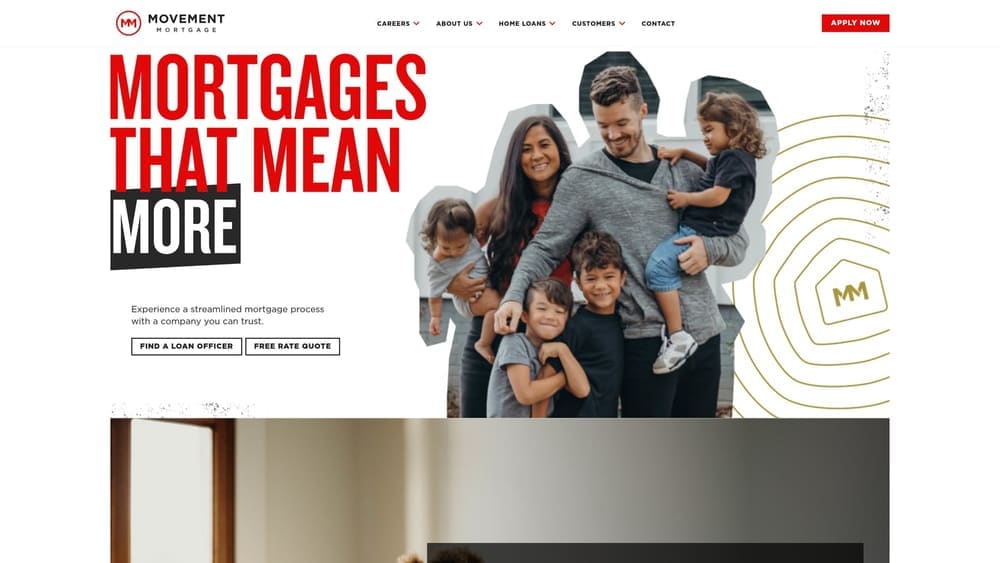
Movement Mortgage is a retail direct lender with a branch network known for fast in-house underwriting and a structured purchase-focused document process.
Where This Tool Shines
Movement’s primary differentiator is processing speed. The lender has built its reputation around a 6-to-7-day processing commitment on purchase loans, which matters in competitive markets where sellers scrutinize pre-approval credibility. In-house underwriting means document review stays internal rather than being outsourced, which can reduce back-and-forth delays on standard files.
Like other retail lenders in this comparison, Movement quotes from its own rate sheet and requires a hard credit pull at application. There is no mortgage pre approval without hard pull option, and no access to wholesale pricing or Non-QM programs. The speed advantage is real for straightforward purchase transactions; the rate comparison limitation is equally real for borrowers who want to shop.
Key Features
In-House Underwriting: Document review handled internally, reducing handoff delays common in outsourced underwriting models.
6-7 Day Processing Commitment: Purchase loan processing timeline that can strengthen offers in competitive markets.
Standard Document Requirements: W-2s, tax returns, 30 days of pay stubs, and two to three months of bank statements — consistent with industry norms.
Hard Pull at Application: No soft pull mortgage broker alternative; hard credit inquiry required to proceed.
Program Availability: Conventional, FHA, VA, and USDA programs from Movement’s own rate sheet.
Best For
Purchase borrowers on tight timelines who value processing speed and prefer a branch-based retail lender. Less suited for rate-comparison shoppers, self-employed borrowers with complex income, or anyone seeking mortgage pre approval without hard pull options.
Pricing
No published upfront application fee. Origination fees and rate structure disclosed at application. Hard pull applies.
4. Veterans United Home Loans
Best for: Active-duty and veteran borrowers navigating VA-specific document requirements
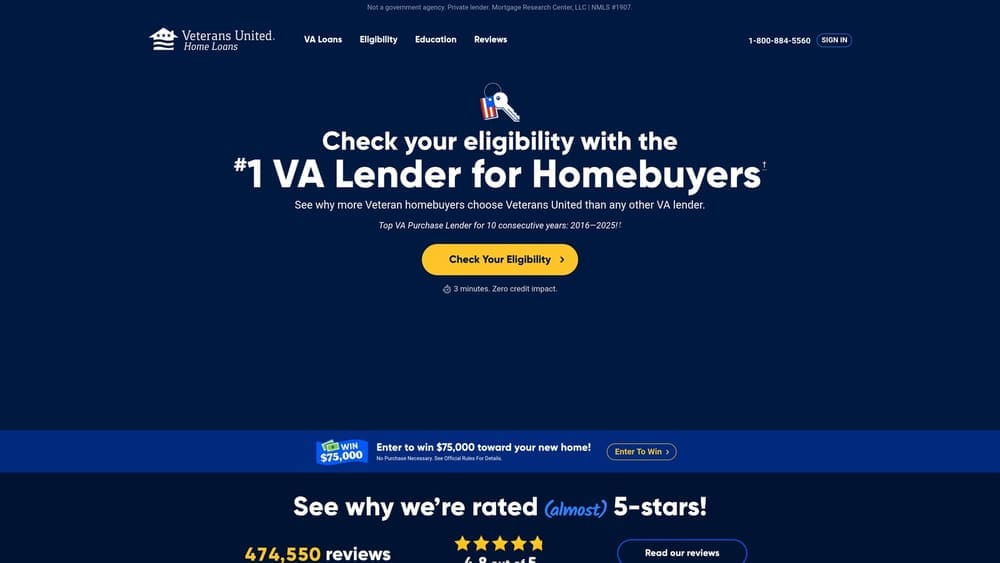
Veterans United Home Loans is a VA loan specialist retail lender with deep expertise in VA-specific document requirements including DD-214 and Certificate of Eligibility processing.
Where This Tool Shines
Veterans United’s focus on VA loans is genuine and operationally meaningful. The lender’s staff is trained specifically on VA entitlement documentation, which matters because VA loan document requirements go beyond the standard mortgage checklist. A DD-214 (Certificate of Release or Discharge from Active Duty) and a Certificate of Eligibility (COE) are required for VA loans — and errors or delays in these documents are a common source of closing delays when working with lenders who don’t specialize in VA programs.
The limitation is the same as other retail lenders: Veterans United quotes from its own rate sheet, requires a hard credit pull at application, and does not offer broker access to wholesale pricing. For VA borrowers who want to compare rates across multiple lenders without a credit hit, the no credit hit mortgage application process at a broker like Lower Mortgage Rates remains the structural alternative.
Key Features
VA-Specific Document Expertise: Dedicated guidance on DD-214, Certificate of Eligibility, and military service record requirements that general lenders often handle inconsistently.
Military Loan Specialists: Staff familiar with VA entitlement calculations, funding fee structures, and service-specific eligibility nuances.
Standard Income and Asset Docs: W-2s, pay stubs, tax returns, and bank statements apply alongside VA-specific requirements.
VA Funding Fee Context: Specialists can walk borrowers through funding fee amounts based on service history, down payment, and whether it’s a first or subsequent use of VA entitlement.
Hard Pull at Application: Standard retail lender requirement — no soft-pull pre-approval option available.
Best For
Veterans, active-duty service members, and surviving spouses who want VA loan specialization and are comfortable working with a single retail lender. For VA borrowers in Virginia, Florida, Tennessee, or Georgia who want to compare rates across wholesale lenders without a credit impact, the broker route is worth evaluating alongside this option.
Pricing
No upfront application fee for VA loans. VA funding fee applies based on service history, down payment amount, and first-versus-subsequent use. Hard pull applies at application.
5. loanDepot
Best for: Borrowers who want a hybrid digital-and-branch retail experience with automated document tools
loanDepot is a retail direct lender with a hybrid online and in-person model, using mello smartloan technology to automate portions of the document verification process.
Where This Tool Shines
loanDepot’s mello smartloan technology attempts to automate income and asset document verification, similar in concept to Rocket’s Verified Approval. The hybrid model — digital application with in-person branch support available — gives borrowers flexibility if they want to start online but prefer a human touchpoint for document questions. Branch availability varies by market, so this is worth confirming for your specific location in VA, FL, TN, or GA.
The structural limitations are consistent with other retail lenders in this comparison. loanDepot quotes from its own rate sheet, requires a hard credit pull at application, and does not offer wholesale pricing access or Non-QM programs through its standard channels. For borrowers with straightforward W-2 income and standard documentation, the digital tools can streamline the process; for complex income situations, the program options are narrower.
Key Features
mello smartloan Technology: Automated income and asset verification designed to reduce manual document submission for qualifying borrowers.
Hybrid Model: Digital application with optional in-person branch support for borrowers who prefer face-to-face document review.
Standard Document Requirements: W-2s, pay stubs, two years of tax returns, and two to three months of bank statements for mortgage application processing.
Program Availability: Conventional, FHA, VA, USDA, and jumbo programs from loanDepot’s own rate sheet.
Hard Pull at Application: No soft pull pre-approval option; hard credit inquiry required to proceed with a formal application.
Best For
W-2 borrowers who want a blend of digital convenience and in-person support from a retail lender. Not suited for self-employed borrowers needing Bank Statement or Non-QM programs, ITIN borrowers, or anyone pursuing a mortgage pre approval without hard pull before committing to a lender.
6. NFM Lending
Best for: Borrowers seeking a regional retail lender with a broad program menu across conventional, FHA, VA, and USDA
NFM Lending is a regional retail lender offering a range of loan programs — conventional, FHA, VA, USDA, and jumbo — with document requirements that vary by program type.
Where This Tool Shines
NFM Lending’s breadth of program types means borrowers with different needs — FHA, VA, USDA rural, or conventional — can work with a single regional lender rather than shopping across multiple specialists. The lender provides program-specific document guidance, which is useful for FHA and USDA applicants who face different income eligibility and property documentation requirements compared to conventional borrowers.
As a regional lender, NFM’s branch and licensing footprint matters. Confirm availability and active licensing in your specific state — Virginia, Florida, Tennessee, or Georgia — before starting an application. Like other retail lenders in this comparison, NFM requires a hard credit pull at application and quotes from its own rate sheet. It does not offer broker access to wholesale pricing or the NoTouch Credit Pull soft-pull pre-approval system.
Key Features
Broad Program Menu: Conventional, FHA, VA, USDA, and jumbo programs — document requirements differ meaningfully by program type, and NFM provides program-specific guidance.
FHA and USDA Specialization: Borrowers in these programs receive documentation guidance tailored to program-specific income eligibility and property requirements.
Standard Income Verification: W-2s, tax returns, pay stubs, and bank statements for mortgage application — consistent with industry norms across programs.
Regional Presence: Branch network serves multiple states; confirm VA, FL, TN, and GA availability before applying.
Hard Pull at Application: No soft pull mortgage broker alternative; hard credit inquiry required at the point of formal application.
Best For
Borrowers who want a regional retail lender with program variety and prefer in-person or regional support for FHA, VA, or USDA loans. Verify state licensing and branch availability for your specific market before starting the process.
Pricing
Fees vary by loan program and state. Origination fees and rate structure disclosed at application. Hard pull applies.
The Complete Mortgage Application Document Checklist
Regardless of which lender you choose, assembling these documents before your first conversation will accelerate every step that follows. Think of it as a mortgage application checklist you can work through in one afternoon.
Standard Income Documents: Last two years of W-2s, 30 days of recent pay stubs, last two years of federal tax returns (all pages and schedules).
Self-Employed Additions: Two years of personal and business tax returns, year-to-date profit and loss statement, 12 to 24 months of business bank statements (required for Bank Statement loan programs).
Asset Documents: Two to three months of bank statements for all accounts, most recent investment and retirement account statements, gift letter and transfer documentation if using gift funds.
Identity Documents: Government-issued photo ID, Social Security number, two years of residential addresses.
VA-Specific Documents: DD-214 (Certificate of Release from Active Duty), Certificate of Eligibility (COE) from VA.gov, military service records as applicable.
DSCR / Non-QM Borrowers: Lease agreements, rent rolls, and property income documentation often substitute for personal income documents entirely — confirm with your broker which documents apply to your specific program.
ITIN Borrowers: Individual Taxpayer Identification documentation, alternative credit history (utility payments, rent history), and two years of tax returns filed with the ITIN number.
Frequently Asked Questions
How does a mortgage broker get lower rates than Rocket Mortgage or Movement Mortgage?
An independent mortgage broker accesses wholesale lender pricing — rates offered to brokers that are not available on retail rate sheets. Because brokers like Duane Buziak (NMLS #1110647) shop your file across 500+ wholesale lenders simultaneously, the competitive pressure among lenders often produces lower rates and fees than any single retail lender can offer from its own rate sheet.
Can I get a mortgage rate quote without a hard credit pull?
Yes. Through Lower Mortgage Rates, the NoTouch Credit Pull system provides a soft-pull pre-approval — you see real rate options based on your actual credit profile without any hard inquiry hitting your score. Retail lenders like Rocket Mortgage, Movement Mortgage, loanDepot, Veterans United, and NFM Lending require a hard pull at the point of formal application.
What is the current conforming loan limit in 2026?
The FHFA 2026 conforming loan limit is $806,500 for baseline markets and $1,249,125 for high-cost areas. Loans above these limits are classified as jumbo loans and typically carry different document and qualification requirements.
How much lower is a wholesale mortgage rate compared to a retail bank rate?
The difference varies by market conditions and lender, but the structural reason for the gap is consistent: retail lenders build overhead, profit margin, and distribution costs into their rate sheets, while wholesale rates reflect lender-to-lender pricing without those markups. The worked example in this article illustrates that even a 0.375% rate difference on a $400,000 loan produces over $35,000 in additional interest over 30 years.
What credit score do I need to get the lowest mortgage rate in 2026?
Conventional loans typically price best at 740 FICO and above. FHA loans are available down to 580 FICO with standard overlays, and Lower Mortgage Rates has access to VA loan programs approved to 500 FICO through wholesale lender channels. For current credit score and rate tier relationships, the CFPB’s Explore Rates tool shows how FICO score affects rate pricing across loan types.
How does NoTouch Credit Pull work for a no-hard-inquiry mortgage rate quote?
NoTouch Credit Pull is a soft-pull pre-approval system used by broker Duane Buziak at Lower Mortgage Rates. A soft pull accesses your credit report for rate-matching purposes without triggering a hard inquiry — meaning your FICO score is not affected. Once you select a lender and decide to proceed, a hard pull is completed at that point only, not during the comparison phase.
What is the difference between a mortgage broker and a direct lender on rate?
A direct lender (retail bank or non-bank lender) originates loans from its own funds and quotes from its own rate sheet — you see one lender’s pricing. A mortgage broker represents multiple wholesale lenders and submits your file to compete for your loan. The broker model creates rate competition; the direct lender model does not. The document package you submit is the same either way — the difference is how many lenders see it and compete for your business.
How do I compare mortgage rates across 500+ lenders without damaging my credit score?
Work with a soft pull mortgage broker who uses a soft-pull pre-approval system before committing to a lender. Through Lower Mortgage Rates and the NoTouch Credit Pull process, your document package is matched against wholesale lender options using a soft credit pull — no hard inquiry, no score impact, real rate options. Call 804-212-8663 or start online at lowermortgagerates.com to begin. Borrowers in VA, FL, TN, and GA are eligible.
Making the Right Choice for Your Situation
The core takeaway from this comparison is structural, not subjective. Gather your documents once — income verification, asset statements, ID, and any program-specific additions — and then decide how you want those documents to work for you.
If you’re in Virginia, Florida, Tennessee, or Georgia and want to see what 500+ wholesale lenders will offer without a single credit hit, Lower Mortgage Rates is the starting point. The NoTouch Credit Pull soft-pull pre-approval means you’re comparing real options, not guessing. Duane Buziak (NMLS #1110647 | Coast2Coast Mortgage LLC, NMLS #376205) can be reached directly at 804-212-8663.
If you’re a veteran or active-duty borrower navigating the DD-214 and Certificate of Eligibility documentation, Veterans United’s VA loan specialization is a legitimate option — though VA borrowers in the licensed states above can also access VA wholesale pricing through the broker channel, often with lower overlays. If you prefer the simplicity of a single retail lender and are comfortable with the hard-pull tradeoff, Rocket Mortgage and Movement Mortgage offer solid digital and processing infrastructure respectively.
For self-employed borrowers, DSCR investors, and ITIN borrowers: the retail lenders in this guide generally cannot serve your document profile. Bank Statement, Non-QM, and ITIN programs require a broker with wholesale access to specialty lenders — which is exactly what the broker model provides.
The math is clear. A rate difference that seems small on paper compounds into tens of thousands of dollars over a 30-year loan. Schedule your free consultation today and find out what your document package can actually qualify for across the wholesale market — with no credit hit while you compare.
Duane Buziak, NMLS #1110647 | Coast2Coast Mortgage LLC, NMLS #376205
Licensed in Virginia, Florida, Tennessee, and Georgia
Phone: 804-212-8663 | lowermortgagerates.com