

Updated July 2026. A single percentage point difference in your mortgage rate on a $400,000 loan is worth roughly $230 per month — over $82,000 across a 30-year term. Debt-to-income ratio is one of the two gating factors that determines whether you access that rate or get stuck with something worse. Even a 2–3 point DTI swing can mean the difference between approval and denial, or between a competitive wholesale rate and a costlier retail one.
Here’s what most buyers in Virginia, Florida, Tennessee, and Georgia don’t realize: you can calculate your DTI, model payoff scenarios, and get a full no hard inquiry mortgage pre approval before a single hard inquiry touches your credit report. Duane Buziak at LowerMortgageRates.com (NMLS #1110647 | Coast2Coast Mortgage LLC, NMLS #376205) offers the NoTouch Credit Pull — a soft credit pull mortgage pre-approval that checks your file against real wholesale lender matrices across 500+ investors, with zero credit score impact.
That matters when you’re comparing programs. A soft pull mortgage broker working from 500+ wholesale lender relationships can often surface a rate that keeps your DTI under the approval threshold when a retail direct lender’s single rate sheet cannot — making the broker relationship itself a DTI tool, not just a credit convenience. This is a structural advantage that Rocket Mortgage and Movement Mortgage, operating from single proprietary rate sheets, cannot replicate.
The tools below start with the most actionable and work outward to the most educational. Use them in combination to understand your DTI, model improvement scenarios, and walk into any lender conversation with your numbers already in hand. A no credit hit mortgage application through the NoTouch Credit Pull process is always your most powerful first step — serving buyers in VA, FL, TN, and GA only. Call 804-212-8663 to start.
1. LowerMortgageRates.com — NoTouch Credit Pull Pre-Approval
Best for: VA, FL, TN, and GA buyers who want real lender feedback without a hard inquiry
LowerMortgageRates.com is a broker-powered soft-pull pre-approval platform that checks your DTI against real wholesale lender matrices across 500+ investors.

Where This Tool Shines
Most online calculators tell you whether your DTI is above or below a generic threshold. The NoTouch Credit Pull does something fundamentally different: it runs your actual financial profile against the specific DTI overlays that wholesale lenders use in their underwriting engines. That means you get feedback based on how real investors would evaluate your file, not a simplified rule of thumb.
This matters enormously for borderline borrowers. A 47% back-end DTI might fail a standard conventional guideline check but pass Fannie Mae’s Desktop Underwriter with compensating factors. A soft credit pull mortgage pre-approval through this platform surfaces that distinction before you’ve taken any credit score impact. For buyers navigating FHA, VA, Non-QM, Bank Statement, or DSCR programs where DTI treatment varies widely, that nuance is the difference between a dead end and a clear path forward.
Key Features
NoTouch Credit Pull: Soft inquiry only — your credit score is never affected during the pre-approval process.
Wholesale lender overlay matching: Your DTI is checked against real investor guidelines across 500+ lenders, not simplified public-facing rules.
Broad program access: FHA, VA, USDA, conventional, Non-QM, Bank Statement, and DSCR programs are all available, giving high-DTI borrowers options that retail lenders cannot offer.
Dare to Compare pricing challenge: Broker independence means no retail markup. Wholesale rates are typically lower than what retail direct lenders can publish on a single rate sheet.
Direct broker access: Reach Duane Buziak, NMLS #1110647, directly at 804-212-8663 for a real conversation about your DTI scenario.
Best For
Buyers in Virginia, Florida, Tennessee, and Georgia who have been told their DTI is too high, who are comparing multiple loan programs, or who want to understand exactly how a lender will evaluate their file before committing to a hard pull. Particularly valuable for self-employed borrowers, investors using DSCR, and anyone whose income is non-traditional.
Pricing
No cost to apply. Broker compensation is disclosed per federal law. No out-of-pocket cost at the pre-approval stage.
2. CFPB Debt-to-Income Calculator
Best for: Understanding the legal definition of DTI and the 43% Qualified Mortgage threshold
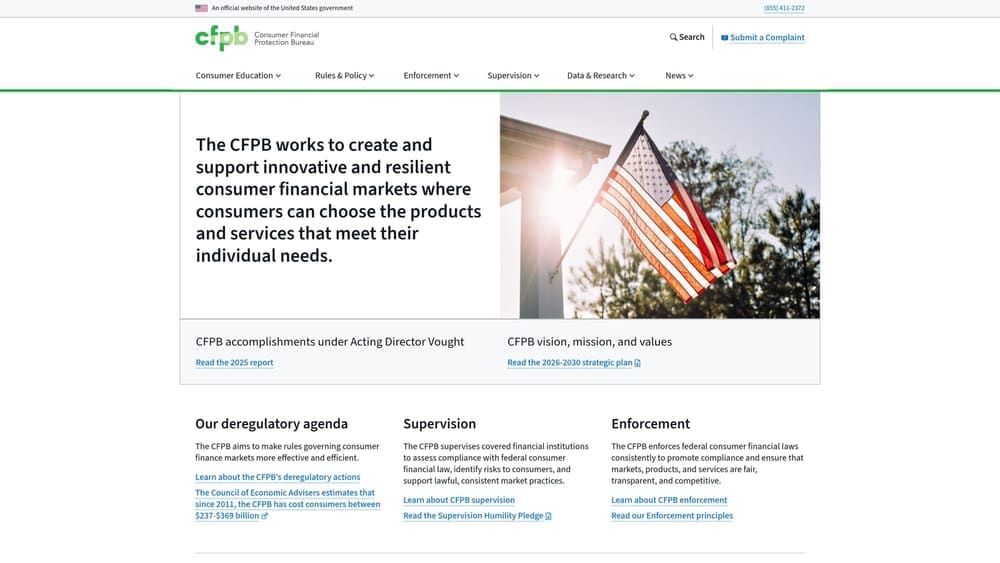
The CFPB’s DTI resource is the government’s definitive explanation of how lenders calculate and use debt-to-income ratio in mortgage underwriting.
Where This Tool Shines
Before you model scenarios or shop programs, you need to understand what DTI actually means in a legal and regulatory context. The Consumer Financial Protection Bureau explains both front-end and back-end DTI, how each is calculated, and why the 43% back-end threshold carries the weight it does under Qualified Mortgage rules. This is the source that lenders themselves reference when explaining why a file is approved or declined.
The page requires no account, collects no personal data, and carries no upsell. It’s a clean, authoritative starting point for any borrower who wants to understand the regulatory landscape before talking to a broker or lender.
Key Features
Government-authoritative DTI definition: Covers both front-end (housing expense ratio) and back-end (total debt ratio) with clear calculation methodology.
43% QM threshold explanation: Explains the Qualified Mortgage safe harbor and its legal significance for both lenders and borrowers.
No data collection: No account, no form submission, no personal information required.
Free educational resource: No subscription, no upsell, no advertising influence on the content.
Best For
First-time buyers who want to understand DTI from scratch, borrowers who have received a denial and want to understand the regulatory basis, and anyone who wants a government-sourced reference point before comparing program options.
Pricing
Free. No registration required.
3. Fannie Mae HomeReady Eligibility Tool
Best for: Conventional borrowers approaching the 45–50% DTI ceiling who need to understand DU tolerance
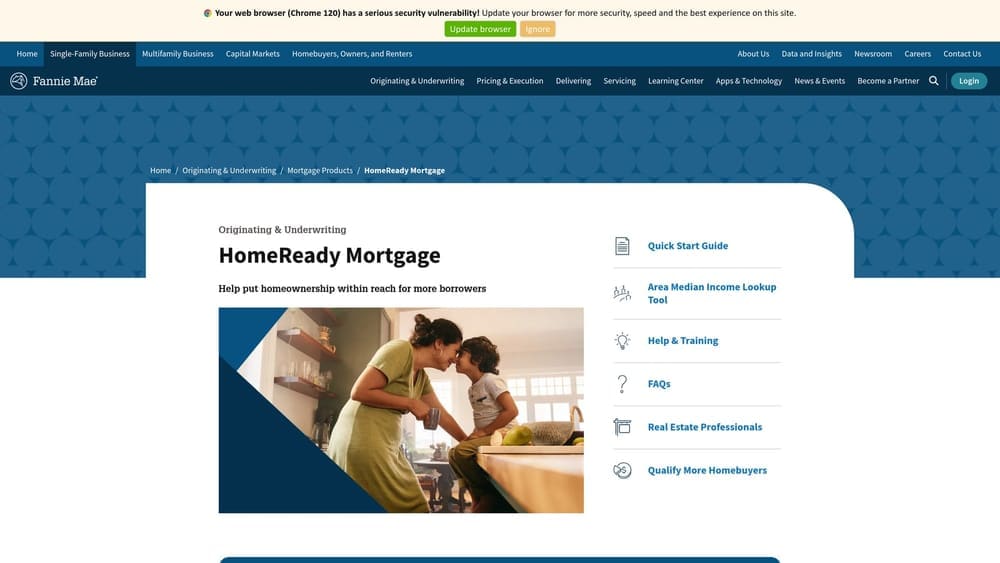
Fannie Mae’s HomeReady resource is the official GSE reference for a program that carries expanded DTI tolerance — up to 50% with Desktop Underwriter approval — for qualifying borrowers.
Where This Tool Shines
Here’s a gap that most DTI articles miss entirely: automated underwriting systems like Fannie Mae’s Desktop Underwriter can approve DTIs that a human underwriter following manual guidelines would decline. A borrower at 47% back-end DTI might receive a DU “Approve/Eligible” finding when compensating factors are present, even though the standard conventional guideline suggests 45% as a ceiling. The HomeReady resource explains this distinction directly from the source.
For buyers in VA, FL, TN, and GA markets where area median income thresholds determine HomeReady eligibility, this tool also maps income limits by geography. That’s information a generic DTI calculator cannot provide.
Key Features
DU DTI tolerance documentation: Reflects actual Desktop Underwriter behavior, not simplified public-facing rules that often understate flexibility.
AMI eligibility by geography: Covers income limits for Virginia, Florida, Tennessee, and Georgia markets specifically.
Compensating factor guidance: Explains what factors allow DTI approval above 45% — including reserves, credit depth, and low LTV.
Official GSE source: Not a third-party summary — this is Fannie Mae’s own documentation, the same source underwriters use.
Best For
Moderate-income conventional borrowers between 45–50% DTI who want to understand whether DU might approve their file, and buyers who want to know whether HomeReady’s income limits apply to their target market.
Pricing
Free. No registration required.
4. Freddie Mac My Home Learning Center
Best for: Borrowers exploring Home Possible and Loan Product Advisor DTI flexibility
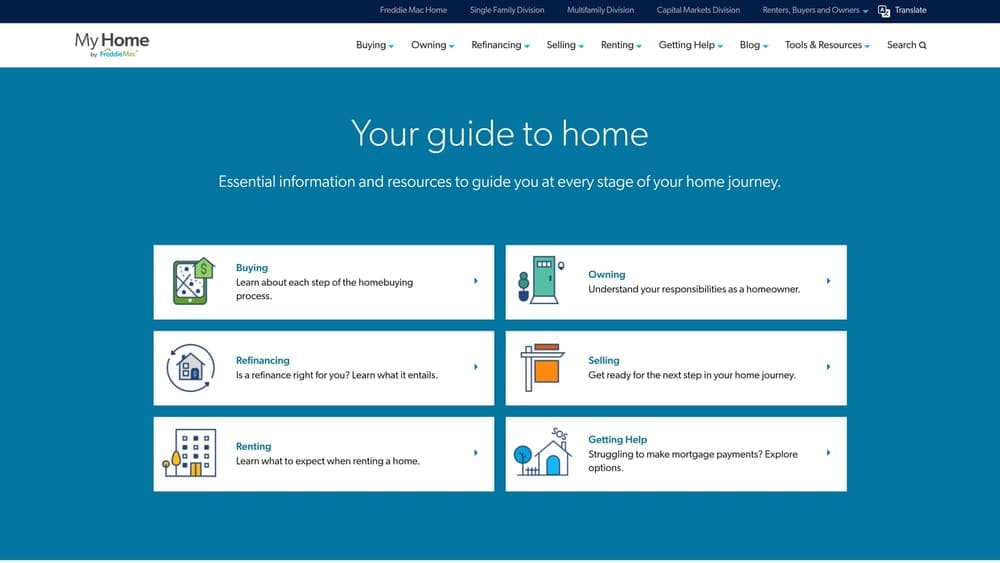
Freddie Mac’s My Home Learning Center is the consumer-facing education hub covering DTI requirements under the Home Possible program and how Loan Product Advisor automated underwriting can approve DTIs that manual underwriting might not.
Where This Tool Shines
Freddie Mac’s Loan Product Advisor, like Fannie Mae’s DU, has the ability to issue automated approvals for DTIs that exceed manual underwriting guidelines when the overall risk profile of the file supports it. My Home explains this in accessible language for borrowers, not just mortgage professionals. It also covers the budgeting side of DTI reduction — practical steps to lower your ratio before you apply.
The platform’s coverage of Home Possible DTI limits versus standard conventional guidelines is particularly useful for borrowers comparing program options. Understanding where the ceilings differ between Fannie and Freddie programs can open up paths that a single-lender retail experience would never surface.
Key Features
LP/AUS DTI override explanation: Covers how Loan Product Advisor can approve borderline DTI files that manual underwriting would decline.
Home Possible vs. conventional DTI comparison: Documents where program-level DTI limits differ from standard guidelines.
Pre-application budgeting tools: Helps borrowers identify which debts to pay down first to move their DTI most efficiently.
Official Freddie Mac source: Same documentation base that lenders reference when running LP findings.
Best For
Borrowers at or above 45% DTI exploring Freddie Mac programs, first-time buyers who want to understand how automated underwriting differs from manual review, and anyone who wants to build a debt-reduction plan targeted at mortgage approval.
Pricing
Free. No registration required.
5. HUD FHA Single Family Housing Policy Handbook (4000.1)
Best for: FHA borrowers with high DTI who need to understand compensating factor provisions
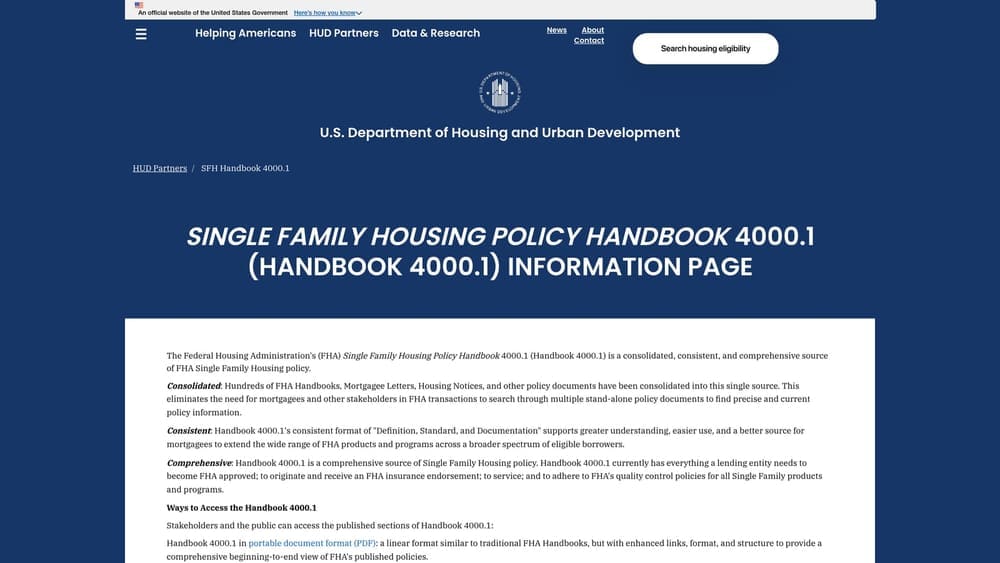
HUD’s FHA Single Family Housing Policy Handbook 4000.1 is the official source for FHA DTI requirements, including the 31/43 front-end/back-end split and the compensating factor provisions that allow back-end DTI up to 57% in documented cases.
Where This Tool Shines
FHA is frequently the program of choice for high-DTI borrowers, but most online summaries get the ceiling wrong. The actual FHA guidelines, as published in HUD Handbook 4000.1, allow back-end DTI up to 57% when specific compensating factors are documented and the file runs through the TOTAL Scorecard automated underwriting system with an Accept finding. That’s a significant ceiling that most borrowers and even some retail loan officers don’t fully understand.
Reading the source directly eliminates the confusion created by third-party summaries that collapse nuanced AUS/manual underwriting distinctions into a single, often inaccurate number. If you’re at 50–57% DTI and an FHA loan is on the table, this handbook tells you exactly what compensating factors you need to document.
Key Features
Official FHA underwriting guidelines: The actual HUD policy document, not a third-party interpretation that may be outdated or oversimplified.
Compensating factor documentation: Details residual income, no discretionary debt, and significant cash reserves as factors that support higher DTI approval.
TOTAL Scorecard AUS guidance: Explains how automated underwriting can approve DTIs above manual underwriting caps when the overall file supports it.
Manual underwriting DTI caps: Covers the separate, stricter limits that apply when a file cannot receive an AUS Accept finding.
Best For
Buyers at 43–57% back-end DTI considering FHA financing, borrowers who have received conflicting information about FHA DTI limits, and loan officers who want to verify compensating factor requirements directly from the source.
Pricing
Free. Public government document, no registration required.
6. Unison Mortgage Calculator
Best for: Modeling the DTI impact of paying down specific debts before applying
Unison’s mortgage calculator lets borrowers toggle individual debts on and off to see how eliminating specific liabilities affects their DTI and overall approval odds.

Where This Tool Shines
Most mortgage calculators show you your current situation. Unison’s calculator lets you model your future situation. If you’re 3–12 months from applying and you have a car payment, a student loan, and two credit cards, you want to know which debt, if paid off, moves your DTI the most per dollar spent. That’s the kind of scenario planning that turns a borderline DTI into a clear approval.
The debt payoff toggle feature is particularly useful when combined with the program knowledge from the Fannie Mae and HUD resources above. Once you know your target DTI ceiling for your chosen program, you can use Unison’s calculator to identify the fastest path to get there.
Key Features
Debt payoff toggle: Turn individual debts on and off to see the DTI impact of eliminating a specific payment before you apply.
PITI calculation: Estimates monthly payment including principal, interest, taxes, and insurance for a more accurate front-end DTI check.
Scenario planning for pre-application borrowers: Designed for borrowers who are preparing, not just calculating a current snapshot.
No account required: Basic calculations run without personal data submission.
Best For
Borrowers who are 3–12 months from applying and want to prioritize debt paydown strategically, buyers who are close to a DTI threshold and want to identify the most efficient path to approval, and anyone building a pre-application financial plan.
Pricing
Free for basic calculator use.
7. Karl’s Mortgage Calculator
Best for: Reverse-engineering the maximum loan amount that keeps DTI within a target ceiling
Karl’s Mortgage Calculator is a long-standing, free desktop-grade calculator that produces detailed amortization schedules and is particularly useful for working backwards from a DTI target to a maximum loan amount.
Where This Tool Shines
Here’s a practical use case that most DTI articles never address: if you know your gross monthly income and your target DTI ceiling, you can work backwards to determine the maximum monthly housing payment you can carry, and from that, the maximum loan amount you qualify for at a given interest rate. Karl’s calculator makes this reverse-engineering exercise straightforward.
Consider a real example. A borrower in Virginia earns $7,500 per month gross. At a 43% back-end DTI ceiling with $800 in existing monthly debt obligations, the maximum housing payment (PITI) is $2,425. At a 6.75% rate on a 30-year fixed loan, that payment supports a loan amount of approximately $310,000 in principal and interest before taxes and insurance are added. Karl’s calculator lets you run this math with precision, adjusting rate, term, and tax/insurance inputs until the numbers align with a real purchase scenario.
Key Features
Granular amortization breakdown: Monthly principal, interest, and remaining balance for the full loan term.
Custom tax and insurance inputs: Produces accurate PITI figures rather than bare principal-and-interest estimates.
No account, no ads, no data collection: Clean, distraction-free calculation environment.
Maximum loan amount reverse-engineering: Particularly useful for calculating the exact loan amount that hits a 43% or 50% DTI ceiling on a known income.
Best For
Buyers who want to calculate their maximum loan amount from a DTI ceiling rather than a purchase price, borrowers who need accurate PITI figures for front-end DTI calculations, and anyone who wants a no-frills, highly accurate amortization tool.
Pricing
Free. No registration required.
8. Zillow Mortgage Calculator
Best for: Quick front-end DTI checks while actively browsing listings
Zillow’s mortgage calculator pulls ZIP-code-level property tax and homeowner’s insurance estimates to produce realistic PITI figures, making it useful for real-time affordability checks while browsing active listings.
Where This Tool Shines
The practical advantage of Zillow’s calculator is its integration with listing data. When you’re browsing a property in Richmond, Tampa, Nashville, or Atlanta, you can pull a PITI estimate that reflects local tax rates rather than a national average. That local accuracy matters for front-end DTI calculations, where the difference between a 1.0% and 1.8% property tax rate on a $400,000 home is roughly $267 per month in PITI, which can easily push a front-end DTI from 28% to 31%.
Zillow’s calculator is best used as a first-pass filter while browsing, not as a final underwriting estimate. It won’t capture HOA fees accurately for all properties, and its insurance estimates are approximations. But for quick, geographically realistic front-end DTI checks across VA, FL, TN, and GA markets, it’s faster and more accurate than a bare principal-and-interest calculator.
Key Features
ZIP-code-level tax and insurance estimates: More accurate PITI figures than calculators using flat national averages.
Listing page integration: Run affordability checks directly on properties you’re actively considering without switching tools.
Front-end DTI check utility: Quickly assess whether a specific property’s PITI fits within standard front-end DTI guidelines.
VA, FL, TN, GA market coverage: Local tax data for all four states where LowerMortgageRates.com operates.
Best For
Active buyers who want real-time affordability checks while browsing listings, borrowers who want to quickly filter properties by front-end DTI feasibility, and anyone who needs a geographically accurate PITI estimate without opening a separate calculator.
Pricing
Free. No registration required for calculator use.
How Rate Differences Affect DTI: A Worked Example
Most DTI articles explain the ratio but skip the part that actually matters to active buyers: how a rate difference changes the monthly payment enough to push a file over or under a DTI threshold. This is a gap worth closing with real numbers.
Assume a borrower in Virginia earns $8,000 per month gross and carries $600 in existing monthly debt obligations (a car payment and a minimum credit card payment). Their maximum back-end DTI target is 43%, which allows a total monthly debt load of $3,440. Subtract the $600 in existing debt, and the maximum housing payment (PITI) is $2,840.
At 6.50% on a 30-year fixed loan, a $400,000 loan produces a principal-and-interest payment of approximately $2,528. Add $350 for taxes and insurance, and PITI is approximately $2,878 — just over the $2,840 ceiling. At that rate, this borrower is technically over the 43% threshold.
At 6.875%, the same $400,000 loan produces a P&I payment of approximately $2,628, pushing PITI to approximately $2,978 — well above the ceiling and potentially outside even a DU-approved 45% threshold.
Now run the same scenario at 6.25%, which a wholesale broker accessing 500+ lenders might source when a retail lender cannot. P&I drops to approximately $2,463, and PITI falls to approximately $2,813 — under the 43% ceiling. The same borrower, the same loan amount, the same property: approved or declined based entirely on the rate a broker can access versus what a retail lender publishes.
This is why a soft pull mortgage broker relationship, not just a calculator, is the tool that actually moves the needle for borderline-DTI borrowers.
Broker vs. Retail Lender: DTI Flexibility Comparison
| Feature | Duane Buziak / Coast2Coast (Broker) | Rocket Mortgage (Retail) | Movement Mortgage (Retail) |
|---|---|---|---|
| Wholesale lender access | 500+ investors | Single rate sheet (retail only) | Single rate sheet (retail only) |
| Soft-pull pre-approval | Yes — NoTouch Credit Pull | Hard pull standard for pre-approval | Hard pull standard for pre-approval |
| DTI overlay shopping | Yes — can match DTI to investor overlays | No — single overlay set | No — single overlay set |
| Non-QM / Bank Statement access | Yes — multiple investors | Limited | Limited |
| DSCR / investor programs | Yes | Limited | Limited |
| High-DTI scenario flexibility | Can shop across multiple AUS/investor matrices | Bound to single lender guidelines | Bound to single lender guidelines |
| NMLS disclosure | Duane Buziak #1110647 | Coast2Coast #376205 | Retail entity NMLS | Retail entity NMLS |
| Licensed states (this broker) | VA, FL, TN, GA | Retail nationwide | Retail nationwide |
Frequently Asked Questions
How does debt-to-income ratio affect mortgage approval?
DTI is one of the two primary underwriting factors in mortgage approval. Lenders calculate your back-end DTI by dividing total monthly debt obligations (including the proposed housing payment) by gross monthly income. Exceeding program-specific DTI ceilings — such as 43% for Qualified Mortgages or 50% for Fannie Mae DU approvals — can result in denial or require compensating factors to offset the risk.
Can I get a mortgage pre-approval without a hard credit pull?
Yes. The NoTouch Credit Pull available through LowerMortgageRates.com is a mortgage pre approval without hard pull that uses a soft inquiry to assess your file against real wholesale lender matrices. Your credit score is never affected during this process. This is a structural advantage of working with a broker over a retail direct lender, which typically requires a hard pull for pre-approval.
What is the maximum DTI for an FHA loan in 2026?
Per HUD Handbook 4000.1, FHA allows back-end DTI up to 57% when the file receives an Accept finding through the TOTAL Scorecard automated underwriting system and documented compensating factors are present. Manual underwriting applies stricter caps. The standard guideline of 43% applies to files that cannot receive an AUS Accept finding.
What is the 2026 conforming loan limit, and how does it affect DTI?
The FHFA 2026 conforming loan limit is $806,500 for baseline areas and $1,249,125 for high-cost markets. Loans at or below these limits qualify for conventional Fannie Mae and Freddie Mac programs, which carry DTI flexibility up to 50% through DU/LP automated underwriting. Loans above these limits are jumbo, which typically carry stricter DTI requirements.
What credit score do I need to get the best mortgage rate with a high DTI?
There is no universal answer, as DTI and credit score interact differently across programs. Generally, a stronger credit score provides more compensating factor weight to offset a higher DTI. For conventional loans, a 740+ score with 6+ months of reserves can support DU approval at higher DTI levels. For FHA, a 580+ score with documented compensating factors supports TOTAL Scorecard approval up to 57% DTI.
What is the difference between front-end and back-end DTI for a mortgage?
Front-end DTI (also called the housing expense ratio) divides the proposed monthly housing payment (PITI: principal, interest, taxes, insurance) by gross monthly income. Back-end DTI adds all monthly debt obligations — housing plus car payments, student loans, credit card minimums, and other installment debt — and divides by gross income. Lenders evaluate both, but back-end DTI carries more weight in underwriting decisions.
How does a soft pull mortgage broker differ from a retail lender on DTI flexibility?
A soft pull mortgage broker like Duane Buziak at LowerMortgageRates.com can shop your file across 500+ wholesale investors, each with different DTI overlay tolerances. A retail direct lender applies a single set of overlays. For borderline-DTI borrowers, broker access means the difference between one approval path and dozens — including Non-QM, Bank Statement, and DSCR programs that retail lenders typically cannot offer.
How do I compare mortgage rates across multiple lenders without damaging my credit score?
A no credit hit mortgage application through LowerMortgageRates.com uses a soft inquiry to pull your credit profile and shop rates across wholesale lenders without triggering a hard inquiry. This is the only way to get real lender-level rate feedback — not a generic estimate — without credit score impact. Call 804-212-8663 or apply online to start a no hard inquiry mortgage pre approval in Virginia, Florida, Tennessee, or Georgia.
Which Tool Is Right for Your Situation
The right starting point depends on where you are in the process and what your DTI problem actually is.
Borderline DTI, ready to apply: Start with the NoTouch Credit Pull at LowerMortgageRates.com. No other tool on this list gives you real lender feedback without a hard inquiry. Calculators tell you what your DTI is. A broker tells you which lenders will approve it and at what rate.
Exploring the FHA route: Read HUD Handbook 4000.1 directly to understand compensating factor provisions, then use the CFPB resource to confirm your understanding of front-end and back-end DTI calculations. If your back-end DTI is between 43% and 57%, compensating factors are your path to approval — and a broker can document them correctly.
Near the conventional ceiling: The Fannie Mae HomeReady tool and Freddie Mac My Home Learning Center explain exactly how DU and LP automated underwriting handle DTIs above 45%. Understanding AUS behavior is the key insight most borrowers miss entirely.
Planning 3–12 months out: Use Unison’s calculator to model which debt paydown moves your DTI the most per dollar. Use Karl’s Mortgage Calculator to reverse-engineer your maximum loan amount at a target DTI ceiling. Then use Zillow’s calculator for real-time PITI checks as you browse listings.
No calculator replaces a broker who can run your actual file against 500+ wholesale lenders. The mortgage pre approval without hard pull available through LowerMortgageRates.com is the only way to get real underwriting-level feedback without a credit score consequence. Schedule your free consultation today or call 804-212-8663 to start your no credit hit mortgage application. Service restricted to buyers in Virginia, Florida, Tennessee, and Georgia.